Dear Participants in Chiba Campaign 2026,
Today marks the final day of the Chiba Campaign 2026.
Thank you very much for your cooperation and contributions throughout the campaign.
Here is a summary of the Chiba Campaign 2026. The summary was prepared with the assistance of ChatGPT, based on the daily reports and analyses contributed by all the students involved.
Thank you all for your excellent work!
From July 13 to 26, 2026, the “Chiba Campaign 2026” was conducted at the Chiba University Atmospheric Environment Observation Super Site on the Nishi-Chiba Campus. This annual campaign is an independent intensive observation effort that is not tied to any specific project. Its purpose is to bring together all participants to intensively analyze data from ground-based observation networks, including the SKYNET and A-SKY international observation networks, as well as satellite observations, with a particular focus on enhancing students’ research capabilities. Another key objective is to foster interaction among participating researchers and students, freely and creatively explore new observation and analysis methods, and develop the resulting findings into future large-scale research projects. Furthermore, as part of the SHIMERI-SKY Project launched in fiscal year 2026, the campaign served as a platform for advancing and intercomparing lower-atmospheric water vapor observation technologies.
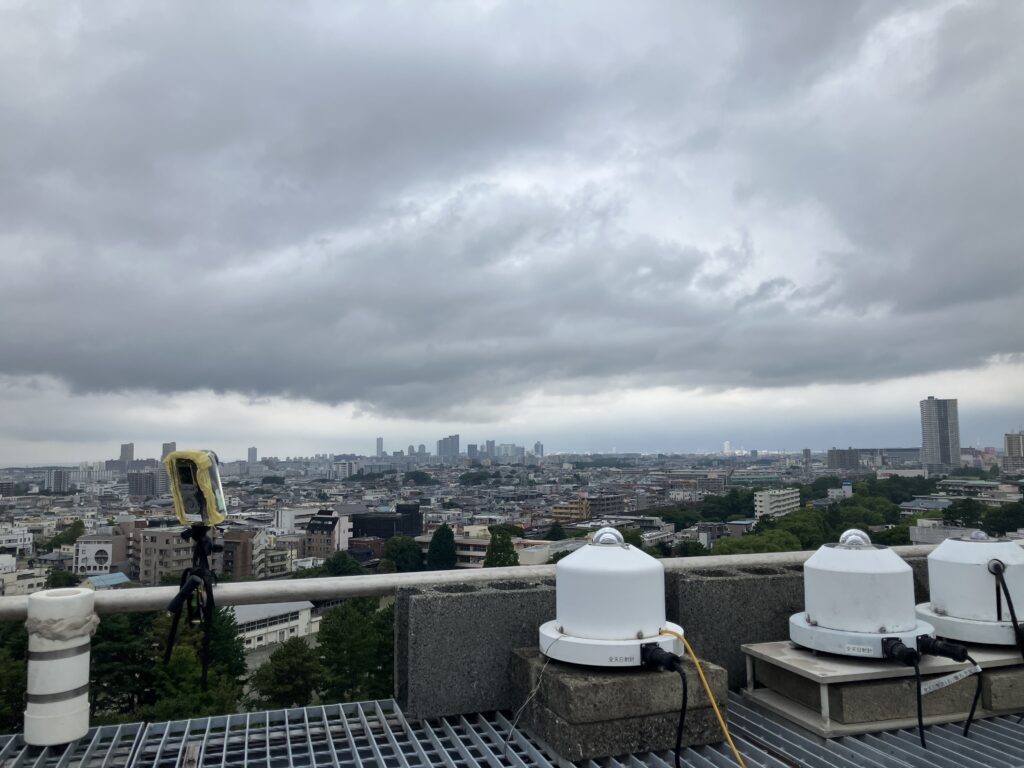
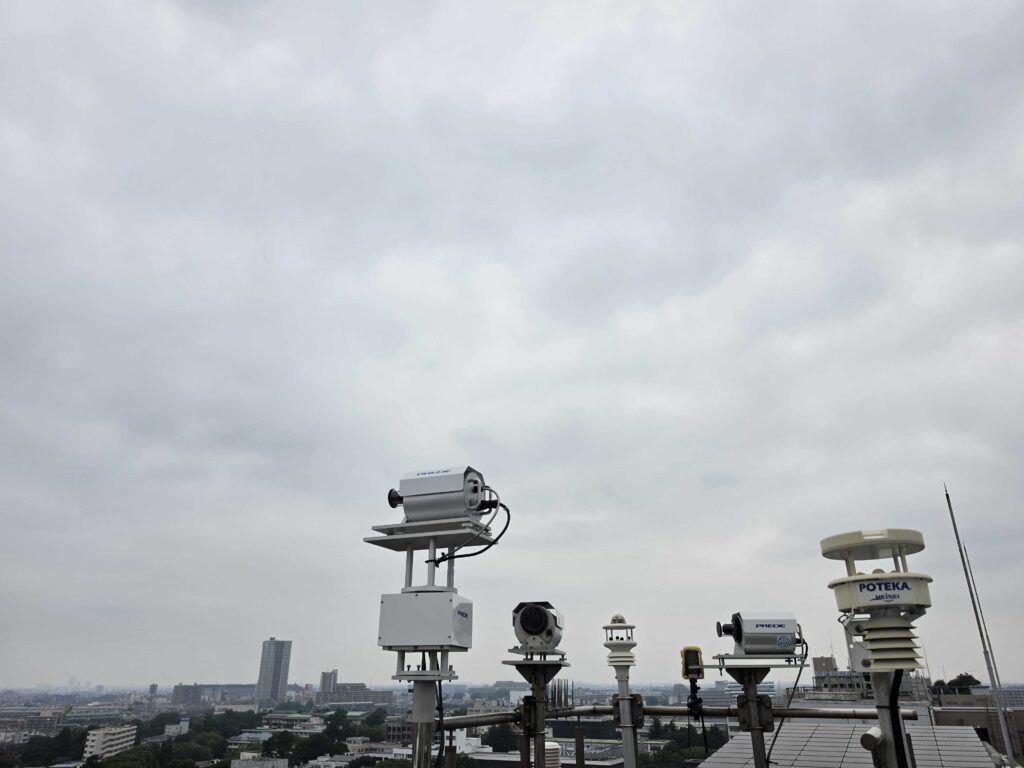
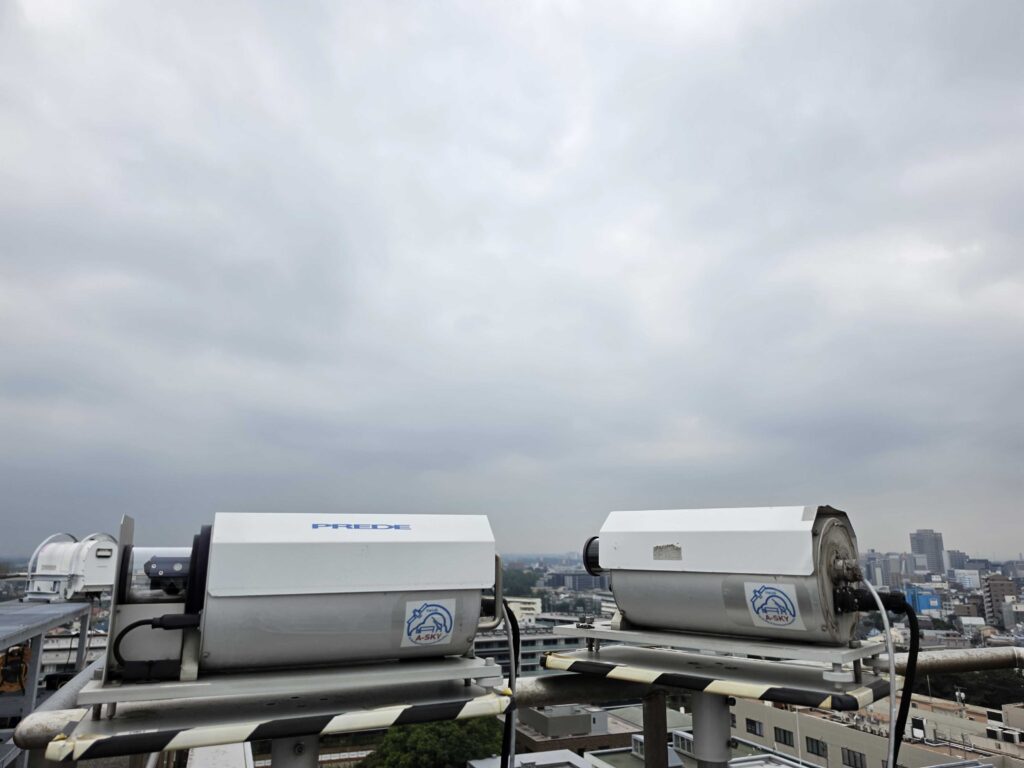
During the campaign, a diverse array of ground-based observation instruments were operated simultaneously, including A-SKY/MAX-DOAS, SKYNET sky radiometers, an LI-7810 for continuous observations of CO₂, CH₄, and H₂O, a COSMOS black carbon monitor, PM₂.₅ monitors, a water vapor observation system using digital terrestrial broadcast waves (DTBW), GNSS receivers, and multi-function meteorological instruments. In addition to these observational data, satellite and numerical model data were combined, including data from the Japan Meteorological Agency’s LFM and MSM systems, radiosonde observations, the Himawari satellite, the GOSAT series, and Sentinel-5P. These datasets were used to analyze the spatiotemporal variations of greenhouse gases, water vapor, NO₂, SO₂, HCHO, CHOCHO, aerosols, PM₂.₅, and black carbon. We also evaluated the consistency among different observation techniques and examined the relationship between lower-atmospheric water vapor and extreme weather events such as thunderstorms and heavy rainfall.
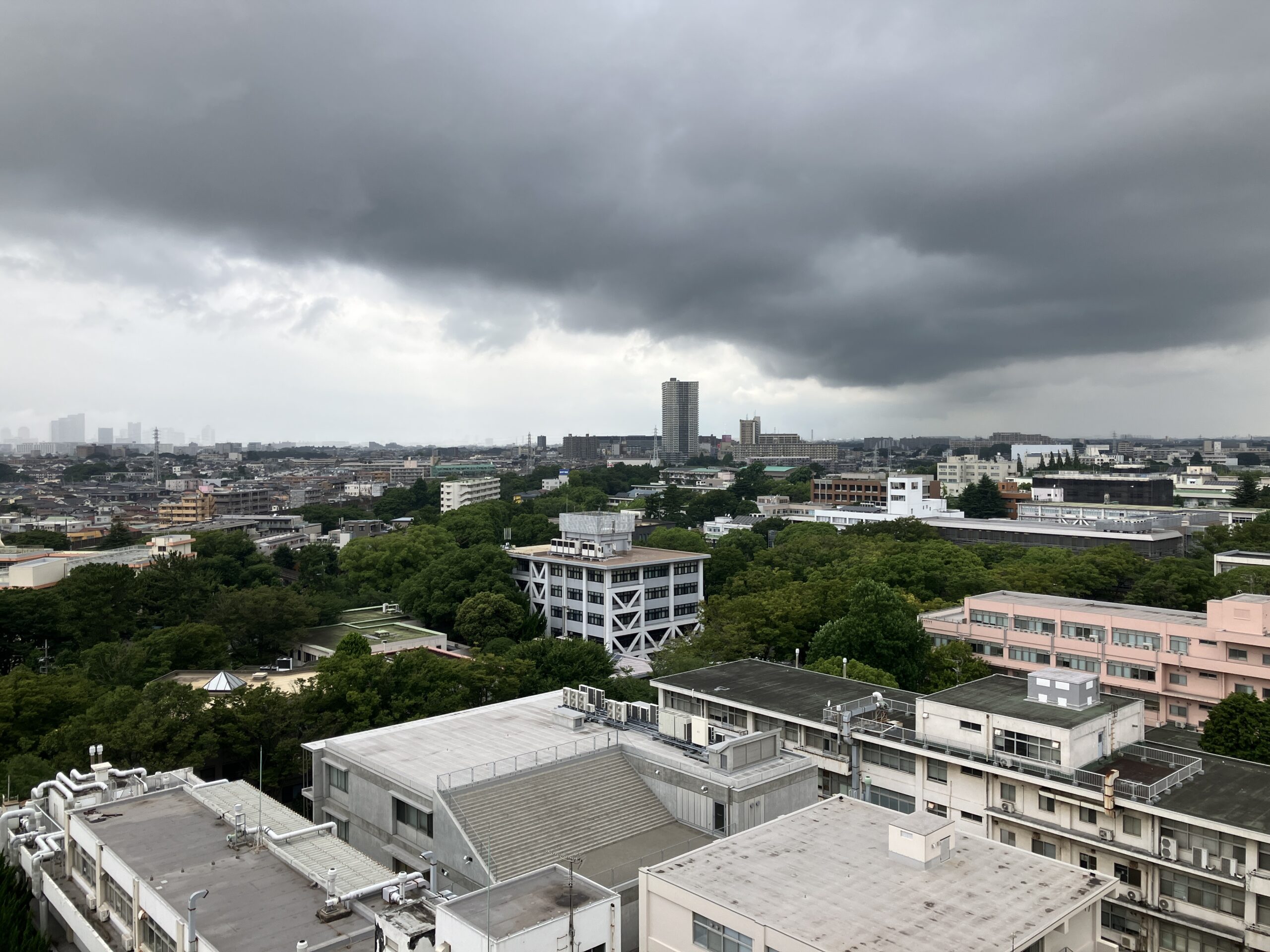
During the campaign, we captured rapid changes in atmospheric conditions characteristic of early summer, including the passage of the Baiu front, the end of the Baiu season, extreme heat, and thunderstorm activity. On July 13, abrupt changes in CO₂, NO₂, HCHO, and other gases were observed in response to changes in air masses associated with the passage of the front. On July 15, a temperature increase of approximately 2 °C, possibly associated with a foehn phenomenon caused by southerly winds, was observed together with variations in water vapor and greenhouse gases. On July 16 and 17, high-MLCAPE conditions, thunderstorms, and heavy rainfall occurred across the Kanto region, and atmospheric instability was analyzed using A-SKY/MAX-DOAS observations and meteorological data.
Around July 20, coinciding with the end of the Baiu season in the Kanto region, A-SKY/MAX-DOAS clearly captured a sharp increase, or “jump,” in boundary-layer water vapor content, as was also observed last year. This phenomenon was confirmed as an important feature characterizing the seasonal transition. Furthermore, comparisons of water vapor observations obtained using multiple methods—including DTBW, GNSS, MAX-DOAS, and LI-7810—showed that each observation method captures water vapor variations at different altitudes and spatial scales, revealing their respective characteristics and complementarity. Comparisons among MAX-DOAS, radiosonde, and mesoscale analysis data also showed generally consistent diurnal variations in lower-atmospheric precipitable water and water vapor. These results support the validity of the numerical model, while the high-temporal-resolution observations also detected short-term variations that are difficult for numerical models to capture. New insights into various atmospheric phenomena were obtained, including evidence of contributions from ship emissions during periods of high SO₂ concentrations and possible contributions from active photochemical reactions and biogenic VOCs during periods of high HCHO and CHOCHO concentrations.
Through this campaign, the comprehensive analytical framework combining multiple observation techniques with numerical models and satellite data was further strengthened. At the same time, students enhanced their data analysis skills and developed new research topics. The findings obtained through the campaign are expected to contribute significantly to future research initiatives, including the SHIMERI-SKY Project, as well as to a better understanding of extreme weather phenomena and the advancement of high-precision atmospheric environmental monitoring technologies.
(Hitoshi Irie)